Why it matters
A proper inspection prevents efficiency losses and safety risks
Hotspots
Hot points flag faulty cells that cut output and can become a fire risk.
Micro-cracks
Cracks invisible to the eye but visible in thermal, degrading the panel over time.
Bypass diodes
Failed diodes take entire strings of cells out of service.
Soiling & shading
Deposits and partial shading that lower the whole system’s yield.
When to check
The key moments for an inspection
After commissioning — to rule out initial defects.
When a problem appears — if you notice efficiency drops.
Periodically, every 2 years — for optimal yield.
Before warranty expiry — so you can file claims.
Per insurance requirements — for cover in case of damage.
The process
From flight to report, in 4 steps
Drone survey
Fast aerial thermal scan of the whole array, with no system shutdown.
Thermal + RGB capture
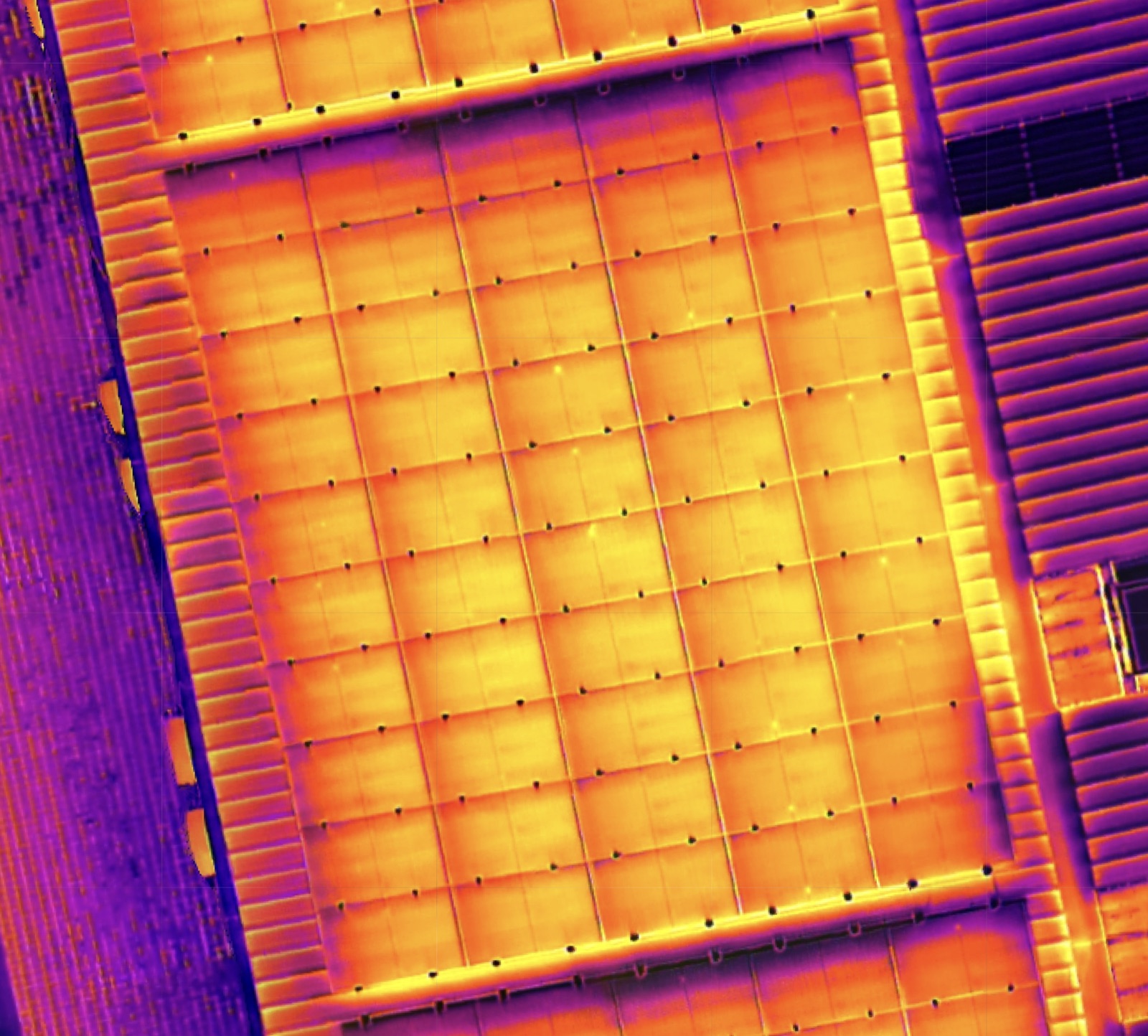
Radiometric thermal imagery overlaid on high-resolution photos.
Analysis & report
We classify anomalies to IEC standards, with severity and location.
Remediation
Clear recommendations and intervention to replace faulty components.
Client platform
All your inspections, in one place
Direct access to thermal and RGB imagery, per-panel data and reports — plus continuous support for analysis and remediation.
Thermal & RGB imageryCompare the thermal and real view, panel by panel.
Reports & dataDownload detailed reports and export anomaly data.
History & comparisonTrack the system’s evolution across successive inspections.
Support & remediationRequest intervention straight from the platform and track status.